Geese
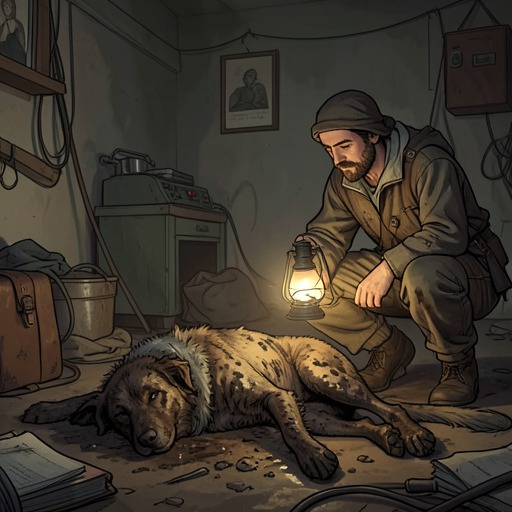
Crimson LakeThe geese in Ted’s care, led by the mother goose Woman, are more than a domestic detail: their vulnerability gives shape to his fear, while caring for them offers a modest counterweight to the violence surrounding him. When gunfire drives him from his house, Ted’s first urgent concern is their safety. Their eventual return to his lawn marks not a cure for the danger, but a small, visible measure of calm.
The Flock and Its Place in Ted’s Life
Woman and her goslings enter Ted’s life as fragile creatures whose survival has depended on care. He remembers taking them to the vet in a cardboard box, the birds’ feathers fluffed with what he understands as raw fear, their lives literally in his hands. That memory makes their presence on his porch meaningful: they are not simply animals he keeps, but living dependants whose recovery has given his days a structure and a responsibility beyond his own distress.
The geese also occupy an emotional place left by Ted’s separation from his child. He recognizes that Woman and her babies have partly taken the child’s place, while also reminding him that helplessness is not his condition alone. Danger and terror reach beyond him; the birds, too, are exposed, yet they can survive. Ted sits on the porch in the mornings watching them, and their persistence offers him an unspoken, conditional hope that he might one day be rescued from his own circumstances as they were.
The Shooting and the Decision to Protect Them
During the attack on Ted’s house, an engine revs outside and gravel sprays as the car accelerates. From the back porch, Ted hears Woman squawking as the sound rises. The flock registers the sudden threat in the same moment that Ted and Amanda turn toward the doorway; the birds are caught up in the violence even though it is aimed at the house and its occupants.
After the car roars away, Ted and Amanda lie amid the damage. Amanda calls the attack the most exciting thing she has experienced in weeks, but Ted does not share her response. He gets to his feet, says he will feed and lock up the geese, and tells Amanda to gather her things so they can leave for a while. His practical instruction comes amid his own shock: he wants to be alone to understand that someone has just shot at his home, but the flock cannot simply be left there.
As he drives aimlessly through the cane plantations, Ted thinks again of the birds. Three days earlier, police had almost killed him; now the geese are not safe either. The realization brings him close to tears, though he insists to himself that he cannot lose control over them. That reaction is not merely anxiety about animals in the abstract. Their earlier helplessness and his role in keeping them alive have made their safety part of the fragile order he is trying to preserve.
Valerie Gratteur Takes in the Flock
Ted carries the geese away in a cardboard box and brings them to Valerie Gratteur’s home in North Cairns. Her property backs onto the water, with hidden cyclone fencing intended to keep crocodiles away and a gated jetty at the edge of the grounds. The setting offers a practical refuge for the birds, distinct from the threatened house Ted has left behind.
When Valerie approaches, she peels back a flap of the box just far enough to see Woman’s curious black eye and asks how many chicks there are. Ted answers that there are six. The count makes the burden of his care concrete: he has not brought a vague group of birds, but Woman and six young dependants. Valerie rubs his arm and assures him they will love it there. Ted agrees, then tries to dismiss his own distress as unreasonable because they are only geese. Valerie replies that she has seen the news, recognizing that his upset is about more than the birds.
Before leaving, Ted thanks Valerie for taking care of them. The exchange is quiet, but the handover matters: he cannot keep the flock safe by himself while his home is under threat, and accepting Valerie’s help lets their care continue elsewhere. As wind rises, Valerie looks toward the mountains and says the rains, when they come, will be big. Ted watches her go inside before returning to his car.
Return to Ted’s Lawn
Three days after Ted has visited Amanda in hospital, Amanda rides to his house and finds him lying on the lawn in the afternoon sun. The beard is gone, he has put on some weight, and his skin is darker from spending time outside. Near the fence at the bottom of the property, six grey geese wander together, pecking at the grass. The flock has returned to Ted’s space, though the account does not specify how or when they were brought back.
The quiet is relative. Ted says the vigilante attacks have stopped, but cars still sometimes slow as they pass at night. There have been no further bricks, fireworks, or crowds. Against that recent history, the geese’ unhurried movement across the lawn makes the change legible without suggesting that danger has vanished: Ted is outside again, resting, while the birds move freely nearby. The return of the flock reconnects him with the ordinary act of watching over living creatures, a steadier rhythm after a period when both his home and their safety were under attack.